Cabinetry plays a major role in both the function and appearance of a kitchen, bathroom, or storage space. It impacts how the room works day to day, how long your renovation feels fresh, and it is the most significant budget factor in a kitchen remodel. With so many options available, it’s common for homeowners to feel unsure about which type of cabinetry best fits their needs.
Understanding the differences between stock, semi‑custom, and custom cabinets — and how each option aligns with your goals - can help you make a confident, informed decision.
Start With Your Goals
Before comparing cabinet types, it’s important to step back and think about what you want this space to accomplish. How the space is used is a big part of the decision, but it’s not the only factor. Consider these additional pieces and be sure to address them with your designer:
How often the space will be used? By how many people? Any specific accessibility needs or factors for season of life? Will you need to work around an existing layout or architectural constraints? What kind of storage is needed? How long do you plan to stay in the home?
A kitchen designed for a young family often has very different priorities than one planned for aging in place or long‑term accessibility. Defining these goals early helps clarify whether budget efficiency, design flexibility, or full customization should be the priority.
What Are Stock Cabinets?
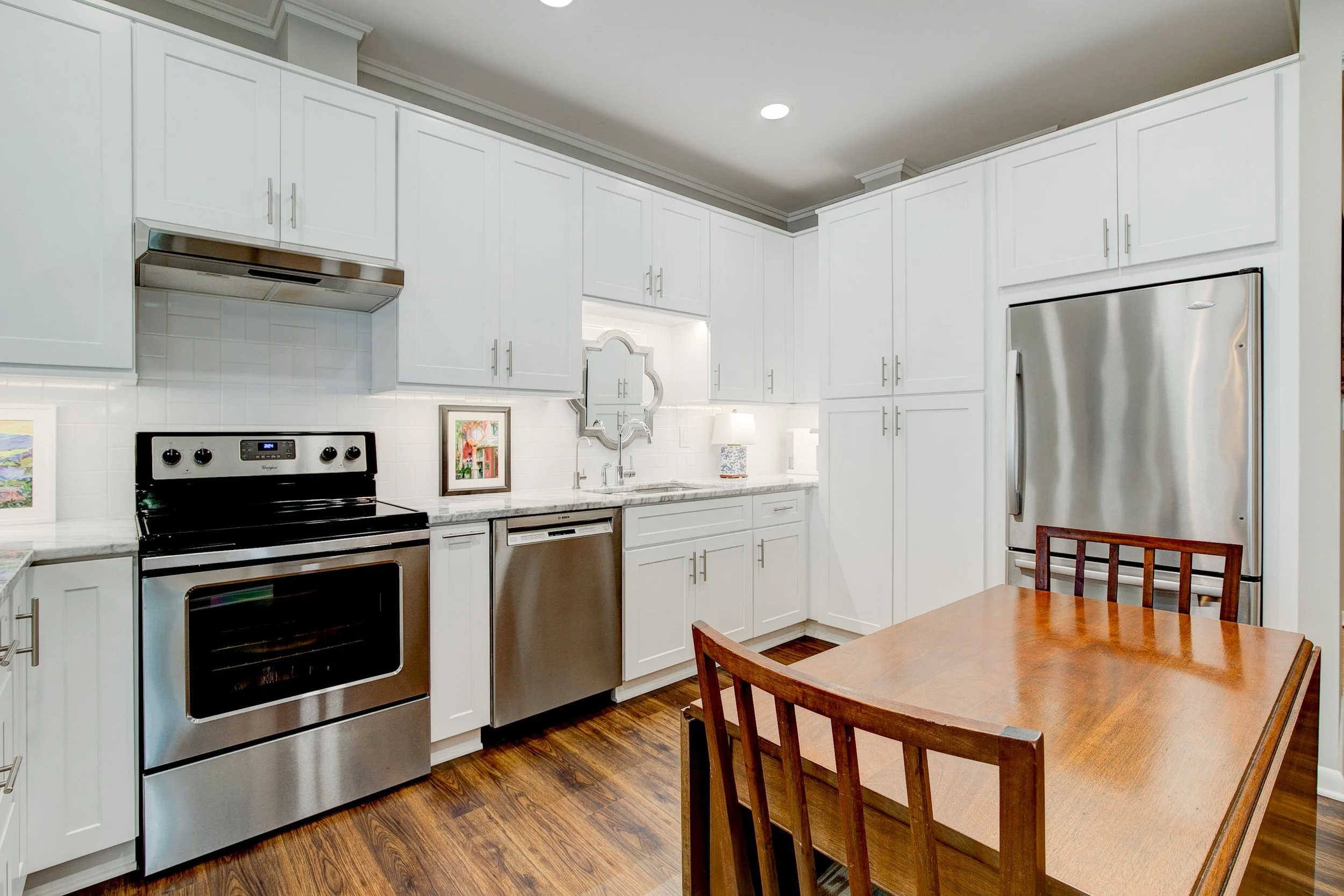
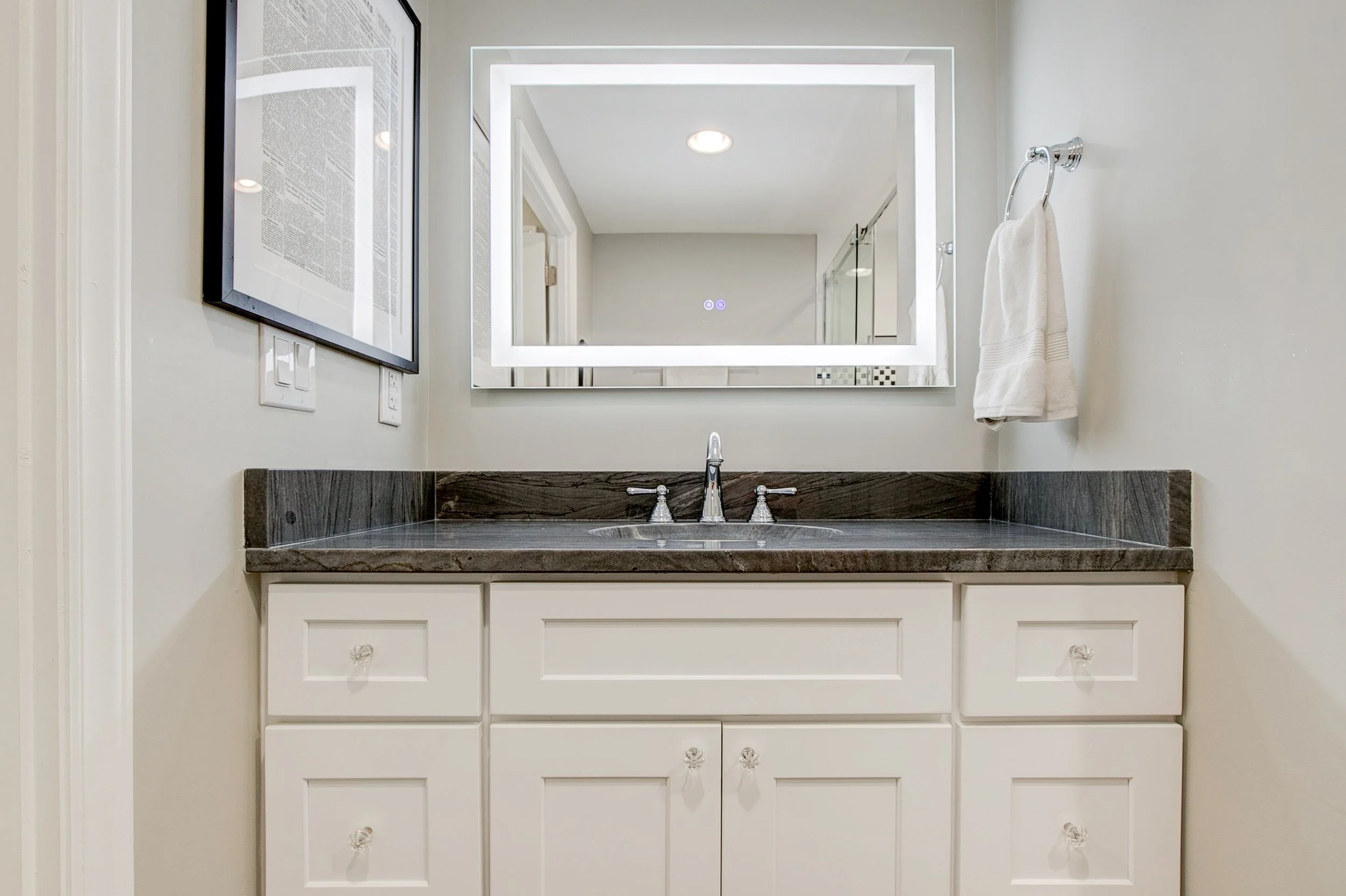
Stock cabinets are pre‑manufactured in standard sizes, styles, and finishes. This category also includes RTA (ready‑to‑assemble) cabinetry. These options are typically the most budget‑friendly and often have shorter lead times.
Stock cabinets can be a good fit when the layout is fairly simple, budget is a primary concern, and selecting from a limited range of finishes and styles is acceptable. Storage solutions are available but can be limited.
However, a thoughtfully designed new kitchen layout using stock cabinets can deliver significantly improved functionality and use of space without the higher price point of custom cabinetry. In more complex layouts, fixed sizing of stock cabinets may result in unused space or design compromises.
Estimated investment:
Kitchen remodels using stock cabinets generally range from $40,000–$70,000.
Understanding Semi‑Custom Cabinets
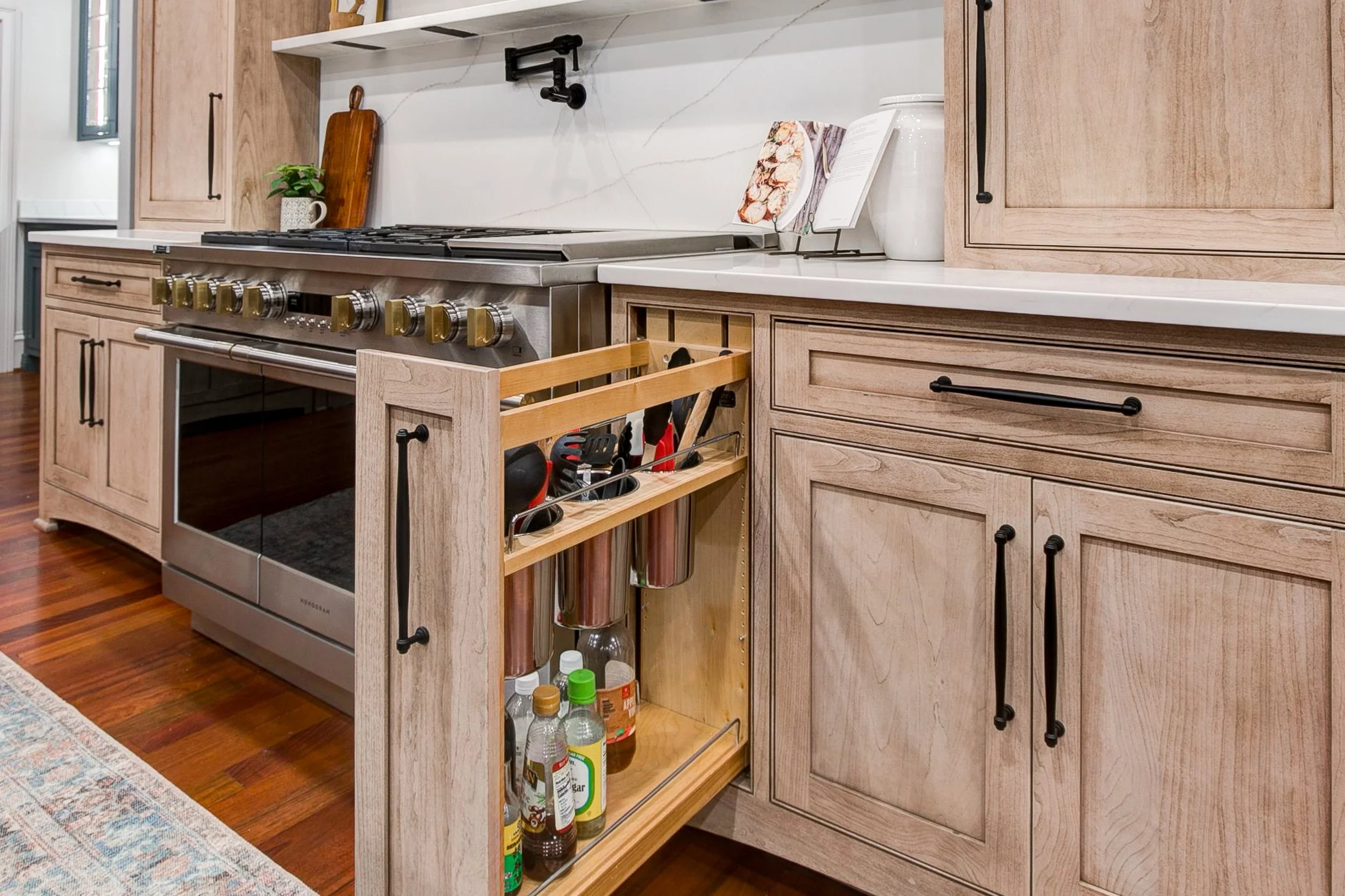
Semi‑custom cabinets offer greater flexibility while still being built within a defined cabinet system. Sizes can often be adjusted, and there are many more options available for finishes, door styles, and storage accessories compared to stock cabinetry.
Semi‑custom cabinets are a strong option when a space needs some flexibility but does not require a fully built‑from‑scratch solution. They work well for homeowners who want enhanced storage features, more personalized design choices, and a balance between customization and budget.
For many homeowners, semi‑custom cabinetry offers an effective middle ground — providing improved function and visual appeal without the investment required for fully custom work.
Estimated investment:
Kitchen remodels using semi‑custom cabinets typically range from $60,000–$100,000.
When Custom Cabinets Make Sense
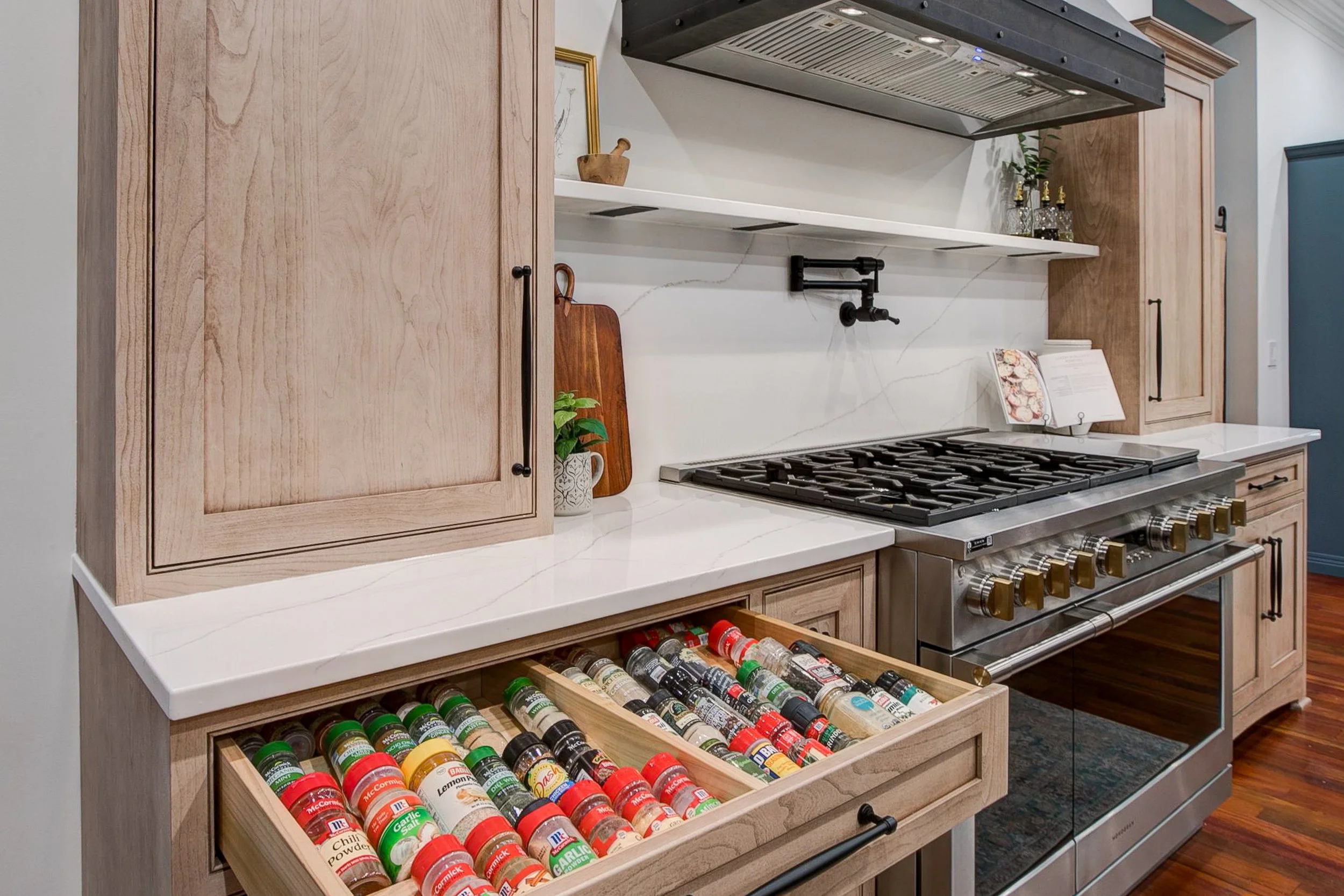
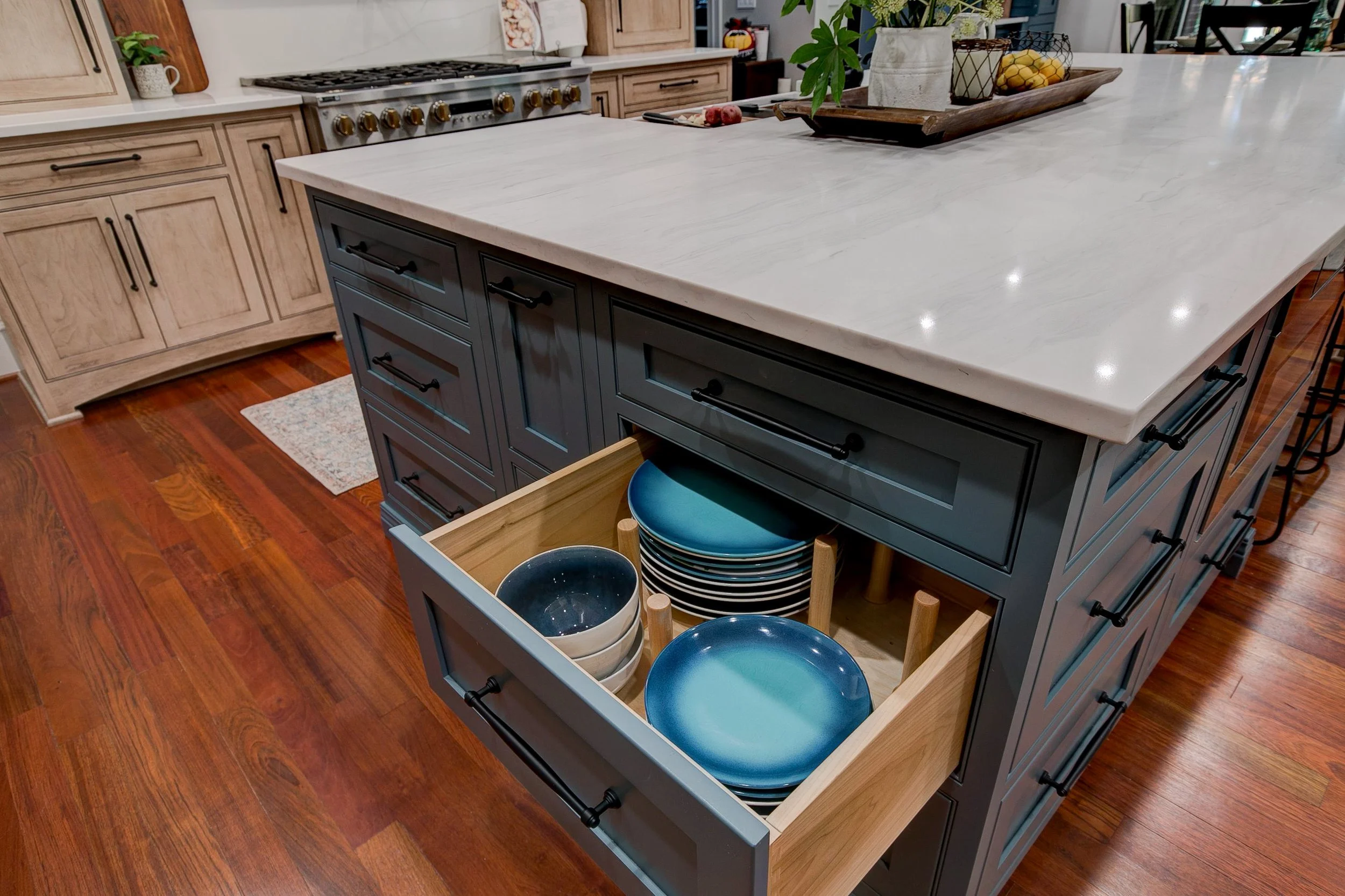
Custom cabinets are built specifically for your space, allowing full control over size, materials, finishes, and internal organization. This level of customization is especially valuable when you are planning to stay in your home for more than 15 years and want cabinetry tailored to your lifestyle.
Custom cabinetry may also be the right choice when maximizing every inch of storage is important, or when a highly personalized design is a priority. Custom cabinets allow the design to work for specific needs for your home and lifestyle, rather than forcing the home to adapt to standard cabinet sizes.
Custom cabinets are also often necessary for universal and accessible design, whether planning ahead for future life stages or accommodating an existing accessibility need.
Estimated investment:
Kitchen remodels with custom cabinetry generally start at $90,000+.
Beyond the Cabinet Box: Other Factors to Consider
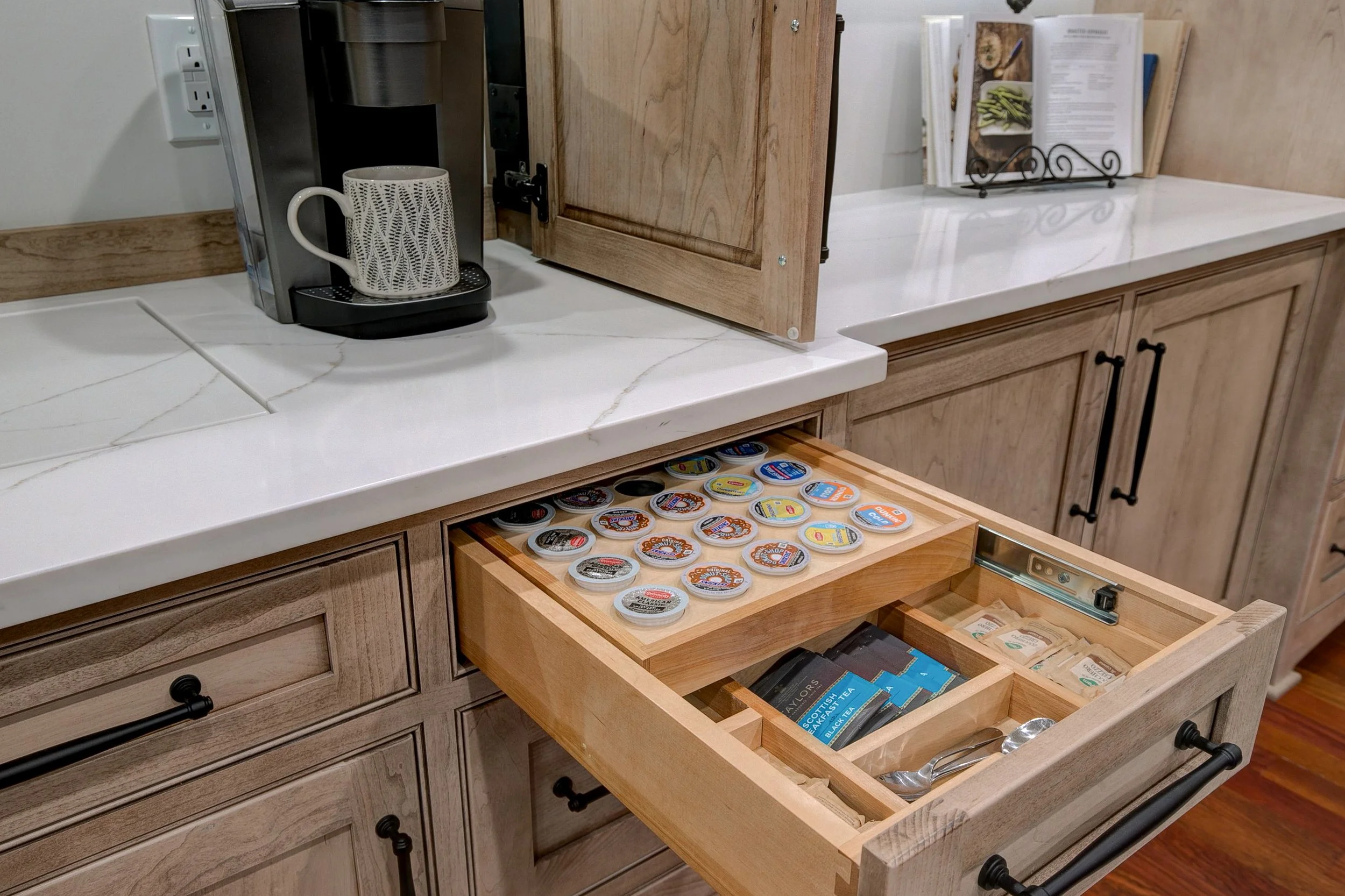
No matter which cabinet category you choose, other details significantly affect the final result. Construction quality, materials, interior organization, hardware, and installation all influence performance and longevity. How cabinetry integrates with countertops, appliances, and lighting also plays a major role in the overall success of the space.
Homeowners should ask their cabinet designer or dealer for clear specifications on how cabinet boxes and drawers are constructed, including information about joinery, drawer hardware, and finishes. Warranty terms and long‑term durability can vary greatly between cabinet manufacturers, making these details an important part of the decision‑making process.
Making a Confident Decision
Whether you choose stock, semi‑custom, or custom cabinets, the right decision is one that supports how your home functions today — and how you want it to serve you in the future. With thoughtful planning and clear guidance, cabinetry becomes a foundation for a space that feels both beautiful and practical.
If you’re planning a kitchen, bath, or storage project and want help determining which cabinet option makes the most sense for your home, we’re here to help guide that conversation.